

close
Choose Your Site
Global
Social Media
 |
Non-contact switches have emerged as a transformative technology across various industries. Unlike traditional mechanical switches that require physical pressure, these advanced devices utilize capacitive technology to detect presence or motion within a specific range, enabling "touch-free" operation.
| Quantity: | |
|---|---|
The 3.3-6V Liquid Capacitive Non-Contact Level Sensor is a compact, hygiene-focused solution designed exclusively for plastic tanks and non-metallic vessels. It enables touchless liquid level control—no direct contact with liquids—making it ideal for scenarios where hygiene and contamination prevention are critical (e.g., food, home appliances). With low-voltage compatibility (3.3-6V DC), IP67 waterproof protection, and a green LED indicator for status monitoring, it balances performance and ease of use for both home and small-scale industrial applications.
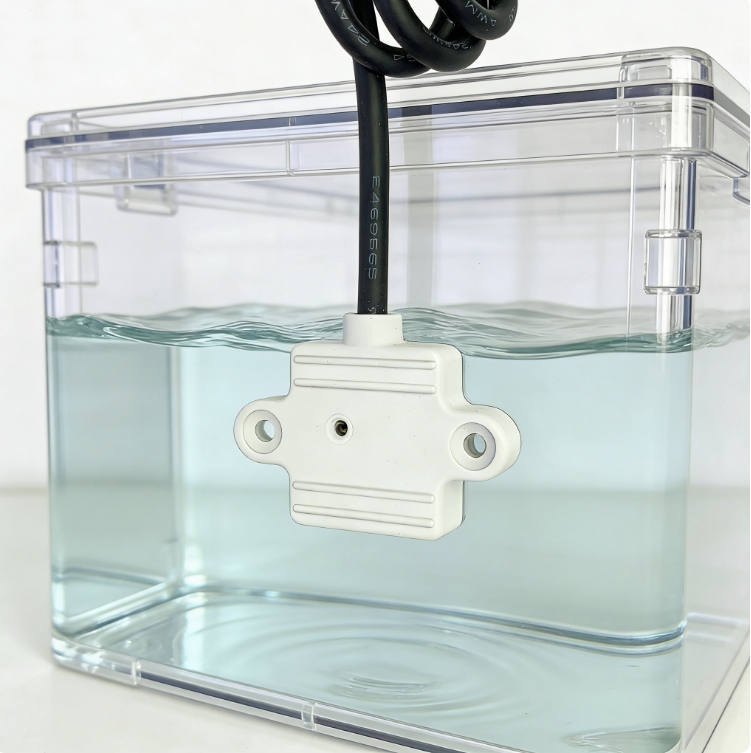
Non-Contact Hygienic Operation: Detects liquid levels through plastic tank walls (no tank drilling or liquid contact). Eliminates cross-contamination risks, perfect for food, beverage, or drinking water systems.
3.3-6V Low-Voltage Compatibility: Works with common low-voltage power supplies (e.g., 5V USB, 6V battery). Safe for integration into small devices like coffee machines or household water tanks, avoiding high-voltage hazards.
IP67 Waterproof & Dustproof: Rated IP67, it resists splashes, dust, and humid environments. Suitable for outdoor plastic water tanks or kitchen appliances with frequent water exposure.
Easy Multi-Mount Installation: Supports three installation methods—bracket fixing (with M3×20 bolts), cable tie securing, or glue bonding. No professional tools needed, reducing setup time.
Green LED Status Indicator: Lights up when powered on, and the output signal toggles (HIGH/LOW) when liquid is detected. Provides visual confirmation of sensor operation, simplifying troubleshooting.
Parameter | Details |
Model | AOER-NCLS-PLAST-01 |
Power Supply | 3.3-6V DC (current consumption: ≤10mA) |
Output Type | Digital switch signal (HIGH: 3.3-5V; LOW: ≤0.5V) |
Operating Temperature | -10℃ ~ +60℃ |
Applicable Tanks | Non-metallic/plastic tanks (wall thickness ≤5mm) |
Protection Grade | IP67 (waterproof, dust-tight) |
Detection Distance | 0~5mm (distance from sensor to tank wall) |
Status Indicator | Green LED (on when powered; signal change triggers flicker) |
Cable Specification | 24AWG, 10m maximum length |
Home Coffee Machines: Monitors water tank levels to prevent dry boiling. Non-contact design avoids water contamination, ensuring drink safety.
Plastic Household Water Tanks: Tracks stored water levels for daily use, with IP67 protection resisting outdoor rain or dust.
Small-Scale Food Processing Vessels: Used in plastic tanks for syrup, juice, or sauce storage—maintaining hygiene and complying with food safety standards.
Automotive Wiper Fluid Tanks: Detects wiper fluid levels in plastic reservoirs, sending signals to the car dashboard for low-fluid alerts.
This sensor uses capacitive sensing technology optimized for non-metallic tanks. It emits a weak electric field that penetrates plastic tank walls (≤5mm thick). When liquid is present inside the tank, the liquid’s dielectric constant changes the sensor’s capacitance. The built-in chip processes this change and outputs a digital switch signal (HIGH/LOW). The green LED indicator updates in real time: it stays on during normal operation and flickers when liquid levels cross the detection threshold, alerting users or connected devices (e.g., machine controllers) to adjust levels.
No. Metal tanks block the sensor’s electric field, preventing capacitance detection. It is only compatible with non-metallic tanks (e.g., plastic, glass) with wall thickness ≤5mm.
Thicker walls (>5mm) weaken the electric field, leading to inaccurate readings. For tanks with thicker walls, contact technical support to customize a high-penetration version of the sensor.
First, check if the power supply is within 3.3-6V and the green LED is on. Then, confirm the tank wall thickness (≤5mm) and ensure no metal objects are near the sensor (they interfere with the electric field). If issues persist, reposition the sensor to avoid tank seams or irregularities.


