close
Choose Your Site
Global
Social Media
Author: Site Editor Publish Time: 2026-05-26 Origin: Site
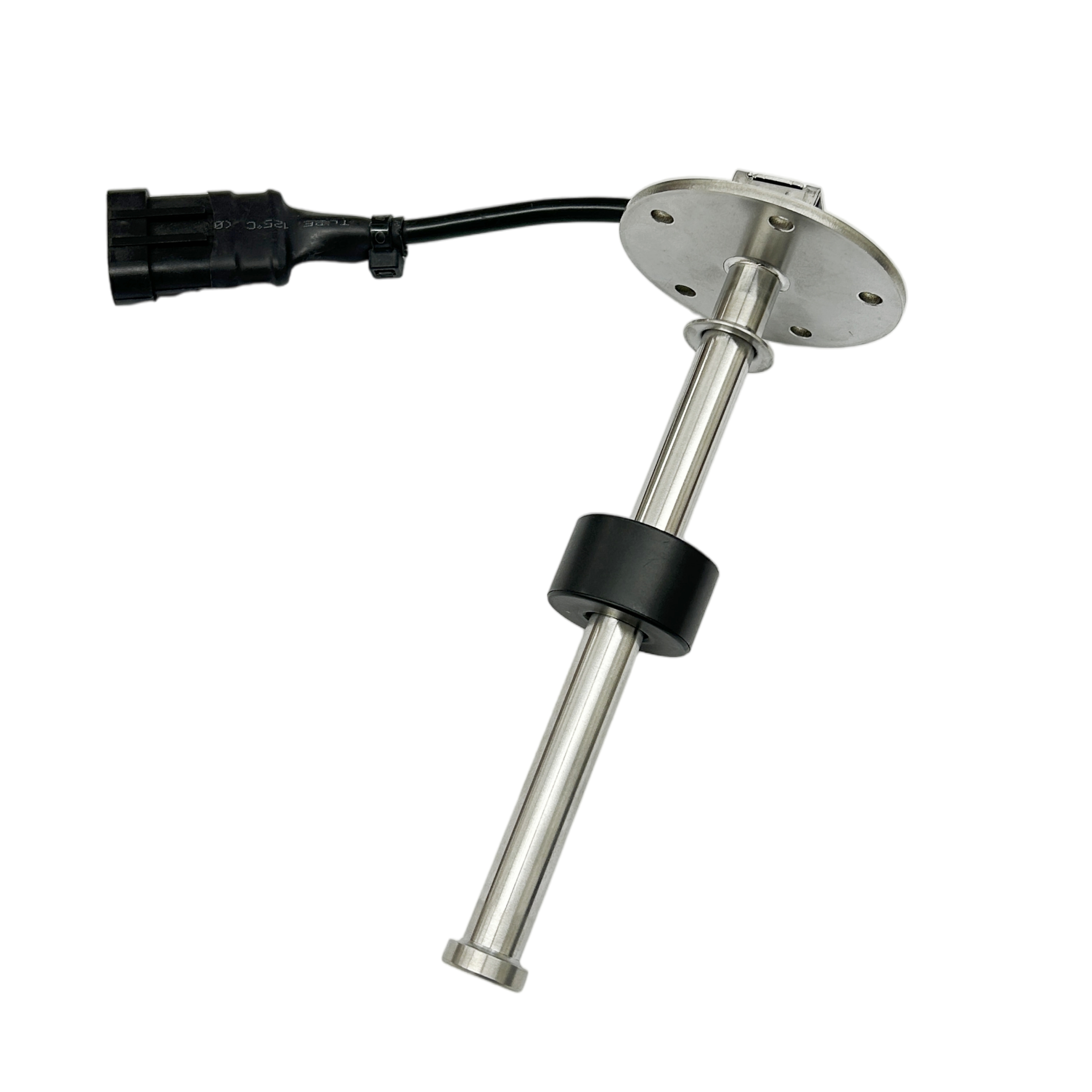
The 4-20mA standard is far from legacy technology. It remains the most resilient, field-proven bridge connecting physical tank environments to modern Industrial IoT (IIoT) control networks. Plant managers and automation engineers demand much more than a basic measurement device. You actively invest in signal integrity, intrinsic safety, and seamless DCS or PLC integration. A failing analog signal creates dangerous blind spots in your facility. Finding a highly reliable Output Level Sensor becomes critical for uninterrupted plant operations.
This article delivers a technical evaluation of why the 4-20mA standard serves as the absolute industry baseline. We explore how to integrate these analog signals effectively into digital systems. You will learn the essential criteria for selecting the perfect hardware. By understanding these principles, you can optimize plant safety and prevent catastrophic process failures.
Signal Integrity: Current-based 4-20mA signals resist voltage drops and electromagnetic noise over long cable runs (up to 1,000 meters).
Built-in Diagnostics: The 4mA "live zero" guarantees immediate fault detection (broken wires) while powering the sensor on a simple 2-wire loop.
Seamless Modernization: 4-20mA analog signals easily convert to digital IT/OT systems (via PLCs and edge tools like Node-RED) using standard ADC protocols.
Safety & Compliance: The 20mA upper limit meets intrinsic safety requirements for hazardous, explosive environments.
Current loops operate on simple but robust physics. Electrons flow through a closed circuit. The current remains completely identical at every single point along the wire. Unlike 0-10V signals, analog current does not suffer from voltage drop over distance. Voltage signals degrade rapidly as cable length increases. Current remains constant throughout the loop. This physical property makes it ideal for large industrial plants. You can run cables across massive facilities without losing measurement accuracy.
The system also offers exceptional noise immunity. Factory floors generate massive electromagnetic interference (EMI). Motors, relays, and pumps create electrical noise. Voltage signals absorb this noise easily. Current loops reject it naturally. They maintain pure signal integrity even in harsh manufacturing environments.
The 4-20mA standard utilizes a "live zero" baseline. This represents a critical engineering choice. You must understand the difference between 0mA and 4mA.
A reading of 0mA: This indicates a severed cable or a completely dead device. The controller immediately recognizes the 0mA state. It then triggers an automatic fail-safe protocol.
A reading of 4mA: This confirms an empty tank, which represents a 0% fill level. The 4mA current proves the sensor and cables remain fully operational.
If we used 0mA to represent an empty tank, the system would face a dangerous ambiguity. The PLC could not distinguish between a dry tank and a broken wire. The live zero eliminates this blind spot entirely.
Petrochemical plants require strict safety standards. Sparks can ignite flammable gases instantly. The 4-20mA standard inherently minimizes this risk. The maximum operational current peaks at 20mA. This sits well below the 30mA threshold. A 30mA current can cause human cardiac danger. Furthermore, 20mA generates insufficient spark energy to ignite explosive atmospheres.
Engineers rely on this low-energy profile. They deploy these devices confidently in hazardous zones. The strict 20mA limit simplifies safety compliance. It makes the standard ideal for volatile chemical level monitoring.
The 4mA baseline does more than provide fault diagnostics. It also supplies continuous electrical power. Early integrated circuit chips required a minimum of 3mA to function properly. Engineers selected 4mA to provide a safe operational buffer. This constant base current delivers enough energy to power the measurement device directly.
Loop power allows for true two-wire simplicity. The power supply and the measurement signal share the exact same twisted pair of wires. Traditional voltage sensors often require three or four wires. You need separate cables for power and signal transmission. The two-wire design cuts copper material requirements in half. It simplifies panel wiring significantly. Maintenance teams spend less time tracing complex wire bundles.
Current loops support highly efficient daisy-chain wiring. You can route the same loop through multiple devices sequentially. The current travels from the sensor, into a local panel indicator, through a chart recorder, and finally into the PLC. Since the current remains identical everywhere, the signal never degrades. Each device reads the exact same measurement. You avoid installing separate splitters or signal duplicators. This modular approach streamlines plant expansions.
Analog loops also support digital overlays. The Highway Addressable Remote Transducer (HART) protocol represents a massive advantage. HART superimposes a high-frequency digital wave directly over the analog 4-20mA current. They operate simultaneously on the same two wires.
You can retrieve smart diagnostics without running new cables. The PLC reads the primary analog variable for fast process control. Meanwhile, the asset management system reads the digital HART data. It checks device health, temperature alerts, and calibration status. This dual-layer communication extends the life of existing copper infrastructure.
Selecting the right communication protocol defines your system reliability. Engineers must evaluate cable distance, power availability, and integration complexity. We outline the objective differences in the decision matrix below. This helps you specify the correct Output Level Sensor for your facility.
Signal Type | Primary Strengths | Notable Drawbacks | Best Use Case |
|---|---|---|---|
4-20mA Analog | Long distances, high noise immunity, simple PLC integration, loop-powered. | Higher continuous power consumption (10-28VDC). Not suited for battery operation. | Heavy industrial process control, outdoor tank farms, hazardous zones. |
0-10V / 0-5V | Low power consumption, easy to troubleshoot with standard multimeters. | Susceptible to EMI. Severe voltage drop over distances greater than 15 meters. | Short cable runs strictly inside local control cabinets. |
I2C | Extremely fast data transfer, supports multiple devices on a short bus. | Strictly for short distances (centimeters). No industrial noise protection. | Board-level communication inside a specific instrument enclosure. |
RS485 (Modbus) | Multi-drop networking, sends multiple variables simultaneously, long distance. | Requires shielded twisted pairs. Programming and addressing can be complex. | Complex SCADA systems requiring dozens of networked instruments. |
We recommend a clear outcome focus during procurement. You should choose the 4-20mA standard when integration simplicity remains non-negotiable. It requires no complex IP addressing. It demands no proprietary software libraries. You simply connect two wires to an analog input card. If your project involves long cable runs across noisy factory floors, current loops offer unmatched reliability.
Conversely, avoid current loops for pure battery-operated IoT nodes. The constant 4mA baseline drains small batteries quickly. For deep-sleep battery devices, digital pulse protocols often serve better. However, for continuous, grid-powered industrial automation, the analog current loop reigns supreme.
Modern microprocessors only understand digital bits and voltage logic. They cannot read raw analog current directly. You must convert the physical current into a voltage format. This process utilizes Analog to Digital Conversion (ADC). Engineers accomplish this through simple electrical mathematics.
You can convert a current loop using a precision resistor. We typically install a 250Ω resistor across the PLC input terminals. Ohm’s Law governs this simple conversion (Voltage = Current × Resistance). Follow these operational limits:
The Baseline (Empty Tank): The sensor outputs 4mA (0.004 Amps). Multiply 0.004A by 250Ω. The PLC reads exactly 1V.
The Midpoint (Half Full): The sensor outputs 12mA (0.012 Amps). Multiply 0.012A by 250Ω. The PLC reads exactly 3V.
The Maximum (Full Tank): The sensor outputs 20mA (0.020 Amps). Multiply 0.020A by 250Ω. The PLC reads exactly 5V.
The microprocessor now processes a clean 1-5V signal. It maps this voltage directly to the 0-100% tank volume visualization. This conversion provides a highly linear, predictable data stream.
Modern integration goes beyond basic scaling. The NAMUR NE43 standard dictates how systems handle minor signal deviations. Process conditions often cause minor sensor drift. Fluid turbulence might push the level slightly beyond 100%.
Under NAMUR NE43, readings slightly outside the 4-20mA span provide specific diagnostic codes. A reading of 3.8mA indicates a minor sensor under-range or drift. It does not indicate a severed cable. A reading of 20.5mA indicates an over-range event. The tank volume exceeds the calibrated maximum. The PLC alerts the operator instead of shutting down the entire line. This nuance prevents unnecessary emergency stops.
We routinely ingest these reliable OT signals into modern IT dashboards. Facilities utilize Edge gateways to bridge this gap. Edge devices accept the 4-20mA signal locally. They convert it using internal ADCs. Software platforms like Node-RED format this data into JSON payloads. They transmit the payload to cloud dashboards via MQTT protocols.
This hybrid architecture delivers incredible performance. You capture the robust physical reliability of the current loop. You also gain modern digital analytics. Typical systems achieve latency rates between 75 and 85 milliseconds. You monitor physical tank realities in near real-time from anywhere.
Procurement demands careful vendor evaluation. Hardware quality varies significantly across the global market. You must separate basic component suppliers from true engineering partners. When shortlisting an Output Level Sensor manufacturer, you should verify specific technical capabilities.
We designed the following evaluation chart to guide your sourcing process. Use these criteria during initial vendor interviews.
Vendor Evaluation Chart: Core Competencies | |
|---|---|
Calibration & Span Testing | Do they offer custom factory calibration? Fluid gravities vary widely. The vendor must align the 16mA span (the gap between 4mA and 20mA) perfectly with your physical 0-100% tank volume. Generic factory settings often require tedious onsite adjustments. |
Compliance & Certifications | Always demand verifiable safety ratings. Look for Intrinsically Safe (IS) or Explosion-Proof (Ex d) certificates. Verify these ratings against your specific plant environment zone classifications. Uncertified hardware introduces severe legal liabilities. |
Over-range Protection | Industrial electrical grids experience transient spikes. Short circuits occur frequently during maintenance. Does their transmitter hardware handle sudden voltage surges safely? High-quality components isolate the internal circuitry from loop faults. |
Technical Documentation | Evaluate their support manuals. A reliable manufacturer provides transparent, high-resolution wiring diagrams. They should publish clear troubleshooting guides and NAMUR NE43 compliance statements openly. |
A qualified manufacturer acts as an extension of your engineering team. They understand fluid dynamics, chemical compatibility, and electrical noise rejection. Do not compromise on these four foundational pillars. The cheapest upfront hardware usually requires constant recalibration and replacement.
The 4-20mA measurement standard balances robust physical-layer reliability with modern data ingestion needs. It resists electromagnetic interference naturally. The live zero functionality guarantees immediate fault detection. Its loop-powered architecture simplifies installation while reducing copper wiring requirements. You can seamlessly map these analog signals into modern PLCs or cloud-based IIoT dashboards.
You should audit your existing control loop infrastructure today. Verify your power supply capacities and inspect aging wire bundles. We highly recommend consulting with a qualified engineering partner to specify the correct sensor housing, measurement range, and safety compliance ratings. By doing so, you protect your facility from unexpected downtime.
If you require advanced configuration assistance, explore our engineered solutions. Our team provides comprehensive technical services to optimize your industrial control loops efficiently.
A: The 4mA baseline serves two critical purposes. First, it powers the loop. It provides enough continuous current to drive the sensor microprocessor without needing separate power wires. Second, it creates a "live zero." This differentiates a true empty tank reading (4mA) from a broken wire or dead sensor (0mA).
A: A standard analog current loop can transmit signals up to 1,000 meters or more. The exact maximum distance depends on your wire gauge and the total loop resistance. Unlike voltage signals, current does not suffer from signal drop over long distances.
A: Generally, no. These devices require a continuous excitation voltage, typically between 10-24VDC. The constant minimum draw of 4mA drains standard batteries quickly. They are power-hungry compared to digital IoT sensors that utilize deep-sleep modes.
A: High-quality industrial sensors enter an over-range state. Following the NAMUR NE43 standard, they output a current slightly above 20mA, such as 20.5mA. This alerts the PLC to the overflow condition without exceeding the electrical safety limits of the hardware.