close
Choose Your Site
Global
Social Media
Author: Site Editor Publish Time: 2026-05-01 Origin: Site
Level measurement failures carry incredibly high stakes in any industrial environment. Tank overflows ruin raw materials and create severe environmental hazards. Dry-running pumps quickly destroy expensive processing equipment. Unexpected process downtime severely disrupts your daily operational flow. Facilities constantly battle these routine risks. Many engineers now transition away from traditional mechanical point-level systems. They actively adopt advanced solid-state sensing technologies. This shift heavily improves reliability in harsh or highly viscous environments. Our guide delivers a pragmatic evaluation for process engineers and procurement teams. We will explore the critical differences between modern capacitive devices and traditional float mechanisms. You will learn how to evaluate media compatibility, installation risks, and system vulnerabilities. We also cover practical strategies for combining both technologies to build fail-safe redundancy. By the end, you will know exactly which detection method fits your specific tank environment.
Float Level Switches excel in budget-conscious, clean-liquid applications where simple, discreet safety interlocks (on/off) are required.
Capacitive Level Sensors provide the superior TCO for viscous, corrosive, or high-scaling liquids due to their solid-state, no-moving-parts design.
The primary differentiator isn't just upfront cost; it's tank integrity (invasive vs. non-invasive installation) and long-term maintenance requirements.
Best Practice: Critical systems often utilize both—capacitive sensors for continuous process control and float switches as redundant safety alarms.
The mechanical float mechanism relies on a highly straightforward physical process. A buoyant float travels along a fixed stem inside the tank. As liquid levels rise or fall, the float moves accordingly. This movement activates an internal magnetic reed switch. Engineers configure this mechanism as either Normally Open (NO) or Normally Closed (NC). This configuration dictates how the circuit responds to fluid changes.
The device outputs a discrete, single-point digital signal. Industry professionals often refer to this as a dry contact. It simply tells the control system whether liquid has reached a specific height. You use this signal to trigger alarms, open valves, or shut down pumps.
However, this mechanical simplicity introduces known vulnerabilities. The device remains highly susceptible to physical wear over time. It is exceptionally prone to sticking or jamming. When you expose a Float Level Switch to calcium scaling, foaming, or viscous fluids, the moving parts often lock up. This physical failure blocks the signal and compromises system safety.
Solid-state detection takes a completely different approach. This technology measures changes in electrical capacitance. It monitors the dielectric constant of the surrounding space. When a liquid or solid medium enters the sensing field, the capacitance changes. The device registers this shift instantly without relying on physical movement.
This method offers highly versatile output options. A Capacitive Level Sensor can provide continuous, smooth analog data. A standard 4-20mA loop is highly common for this application. Alternatively, you can configure it to act as a digital point-level switch. This flexibility makes it ideal for complex automation grids.
Despite these advantages, the technology has specific vulnerabilities. It requires careful initial calibration. You must account for tank wall thickness and the specific material of the vessel. Furthermore, installation demands exact precision. It can produce false readings if installed too close to internal metal structures. We strongly recommend maintaining a minimum buffer zone of two centimeters from any metallic component.
Media compatibility directly dictates sensor survival. Float mechanisms are ideal for clean, non-corrosive water or light oils. They perform perfectly in pristine environments. However, they fail rapidly in demanding conditions. Slurries, thick gels, or liquids leaving heavy residue will paralyze the float. The build-up restricts movement and causes immediate false readings.
Capacitive sensing stands as the definitive choice for harsh media. The solid-state design renders it immune to mechanical jamming. Thick syrups, industrial wastewater, and chemically aggressive fluids do not hinder its performance. Since there are no moving parts to trap debris, the risk of physical fouling practically disappears.
Installation methods greatly impact your vessel's structural integrity. Float installations are inherently invasive. You must drill directly into the tank. Mounting requires top, bottom, or side entry points. Every single drill hole introduces a potential leak point. This invasive approach also complicates sterile environments in pharmaceutical or food production.
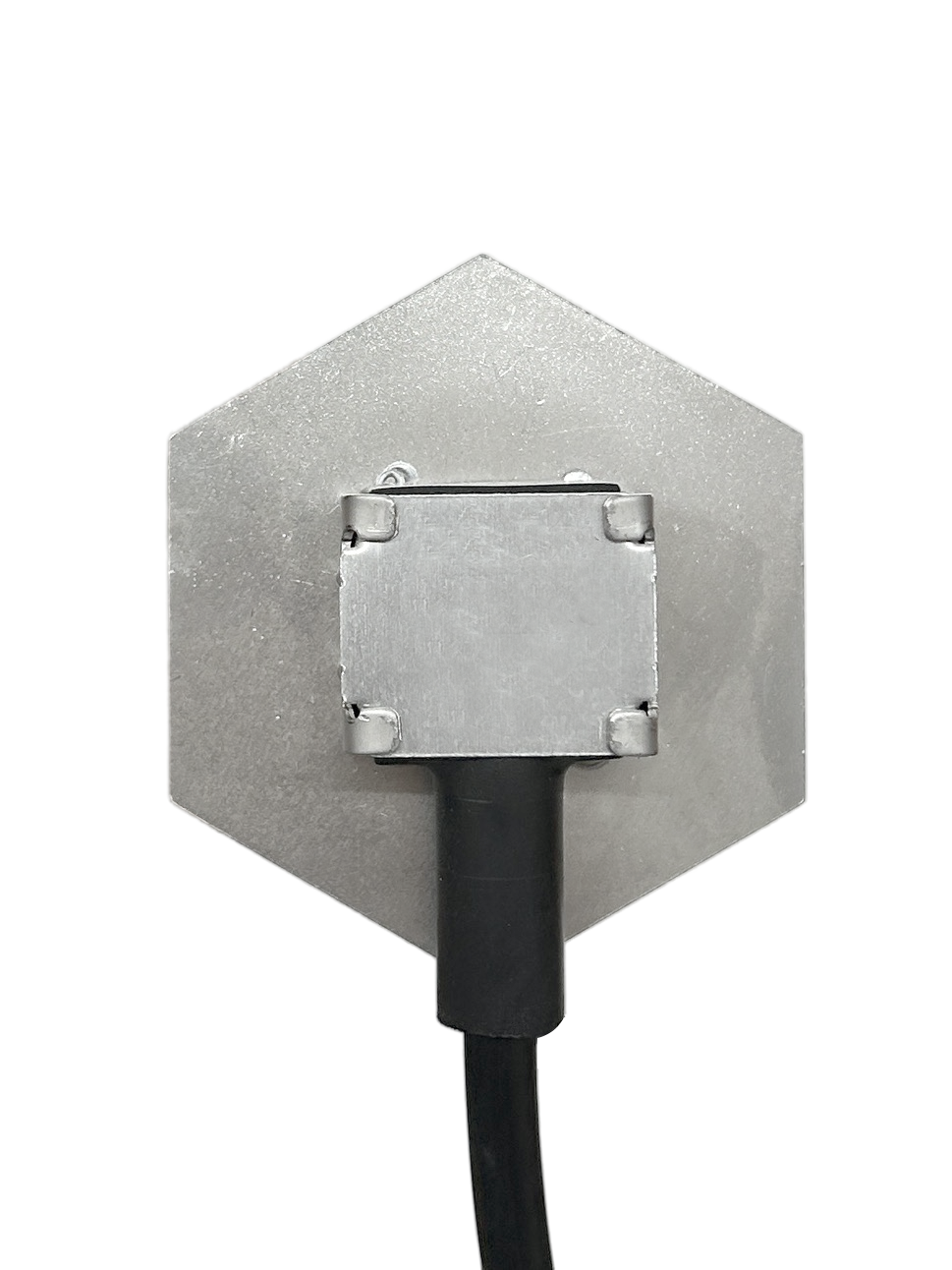
Capacitive technology often supports completely non-invasive installation. You can mount the device externally on non-metallic tank walls. It reads the fluid level straight through plastic or glass. This preserves the structural integrity of the vessel entirely. It also maintains absolute sterility, as the sensor never touches the internal process fluid.
Understanding resolution differences helps optimize your process control. Float devices offer inherently stepped or discrete data. You only know when the liquid hits a specific point. Multi-point floats can offer tiered readings. Some custom models feature up to seven distinct measurement nodes. Even with multiple nodes, they cannot provide seamless volumetric tracking.
Capacitive sensing delivers continuous, high-resolution analog data. The signal flows without any stepped interruptions. You receive real-time, granular visibility into the tank volume. The solid-state field maintains high stability even in turbulent or fast-moving liquids. This ensures your dosing pumps receive accurate data without sudden data spikes.
Evaluating long-term maintenance requirements ensures sustained operational success. Mechanical floats boast a very low initial procurement expense. However, they carry heavy hidden labor burdens. Environments with scaling or sticky fluids require frequent sensor cleaning. Maintenance teams must repeatedly extract the device to free stuck mechanisms. Replacement rates are notably high due to physical wear and tear.
Solid-state capacitive models require a higher upfront capital expenditure. Yet, they provide superior long-term reliability in complex environments. The lifespan is virtually maintenance-free once properly calibrated. Without moving parts, there is nothing to lubricate, unstick, or routinely rebuild. This drastically reduces expensive process downtime and labor hours.
Evaluation Dimension | Float Level Switch | Capacitive Level Sensor |
|---|---|---|
Media Compatibility | Clean liquids, light oils, water. Fails in slurries. | Viscous fluids, syrups, harsh chemicals, wastewater. |
Installation Method | Invasive. Requires drilling and internal mounting. | Non-invasive option. Can mount externally on plastics. |
Measurement Resolution | Discrete / Stepped. Single or multi-point only. | Continuous / High-resolution analog data. |
Maintenance Profile | High labor. Frequent cleaning and part replacement. | Virtually maintenance-free. No moving parts. |
Industrial engineers increasingly argue against a strictly either/or mindset. High-risk industrial tanks require overlapping layers of security. Relying on a single detection method leaves facilities vulnerable to specific environmental anomalies. If an anomaly defeats your primary sensor, the entire system faces catastrophic failure. Leading facilities solve this by integrating both technologies into a unified safety grid.
We highly recommend deploying a hybrid approach for optimal safety. Use a continuous solid-state device for your primary, real-time process visualization. It seamlessly drives your variable frequency dosing pumps and automated valves. The analog data keeps the daily process running smoothly and efficiently.
You must then build a fail-safe layer. We recommend wiring a mechanical Float Level Switch entirely independently from the primary loop. Position it at the absolute maximum fill line. It serves as the ultimate high-level overflow interlock. If the primary system fails or loses calibration, the independent float acts as a hard stop. It physically cuts power to the fill pump, preventing a dangerous spill.
Before writing a specification, you must audit your physical environment. Ignoring environmental constraints leads to immediate installation failures. Review this standard engineering checklist to verify your application readiness.
Tank Material Profile: You must identify the exact material of the vessel walls. Capacitive fields penetrate plastics and glass effortlessly. However, they cannot read through metal. If you have a metallic tank, you must specify an internally mounted, immersed probe design instead of an external pad.
Space Limitations: You need to assess the internal tank geometry carefully. Mechanical floats require adequate vertical or horizontal clearance. The physical stem cannot touch the tank walls during operation. Conversely, solid-state sensors require a minimal footprint. However, they strictly demand specific dielectric offsets to avoid false triggering from nearby metal agitators.
Electrical Outputs: You must verify your control room capabilities. Determine exactly what your Programmable Logic Controller (PLC) requires. Does it need a simple relay or dry contact to trigger an alarm? If so, a float fits easily. Does it require a powered analog loop or a digital NPN/PNP signal? If so, you need the advanced solid-state option.
Making the final choice comes down to matching technology strengths with specific operational constraints. Use the following logic to finalize your procurement specification.
Specify a float device if:
The application involves simple, clean water or highly refined, light oils.
Your primary goal is setting a strict point-level alarm to prevent overflows or dry runs.
The project demands extreme budget efficiency for basic tanks.
You do not require complex, continuous volumetric monitoring.
Specify a Capacitive Level Sensor if:
The process fluid is highly viscous, heavily corrosive, or prone to rapid crystallization.
Tank integrity cannot be compromised, making external non-invasive mounting mandatory.
Smooth, continuous volumetric data is strictly required for precise process automation.
Reducing frequent maintenance interventions is a critical operational priority.
Mechanical float devices undeniably remain the reliable backbone of simple liquid detection. They offer unmatched simplicity for clean water applications and basic alarm triggers. However, solid-state capacitive technology represents a necessary evolution for modern industry. It solves the critical challenges found in demanding, high-viscosity, and continuous measurement applications. The ability to monitor fluid without moving parts drastically improves system reliability.
We encourage you to thoroughly audit your specific fluid characteristics before purchasing. Map out your tank materials and review your PLC input requirements carefully. Building a redundant system using both methods often provides the best protection. Consult directly with an application engineer to review your specific dielectric constraints. Proper custom sizing and expert guidance will ensure a flawless, long-lasting installation.
A: Yes, it can entirely replace mechanical devices if the system requires point-level detection in a harsh environment. It eliminates moving parts, resolving mechanical jamming issues. However, your control system must be properly adapted. It needs to accept the specific solid-state output (such as PNP/NPN or analog), rather than a simple dry contact relay.
A: Externally mounted capacitive sensors cannot read through metallic walls. The metal blocks the electrical field entirely. For metal tanks, you cannot use non-invasive external pads. Instead, an internally mounted, immersed capacitive probe must be used to directly contact the medium.
A: Normally Open leaves the circuit open until the liquid lifts the float to close it. Engineers often use this for high-level alarms. Normally Closed keeps the circuit closed until the liquid lifts the float to open it. This setup is frequently used to stop a fill pump automatically.