

close
Choose Your Site
Global
Social Media
Author: Site Editor Publish Time: 2026-04-30 Origin: Site
Accurate liquid level monitoring is not just a technical requirement in chemical storage—it is a safety necessity. A poorly selected or unreliable Mechanical Level Gauge can lead to overfilling, leakage, production delays, and even hazardous incidents. In our work at Dongguan Dalang Aoer Parts Ltd., we have seen that many users initially focus only on price or basic specifications, but later realize that environmental conditions, chemical compatibility, and durability are far more critical to long-term performance.
Mechanical level gauges remain widely used because they offer a simple, dependable, and power-free solution for monitoring tank levels. Unlike electronic systems, they are less affected by power interruptions, electromagnetic interference, or complex maintenance requirements. This makes them particularly suitable for chemical storage environments where stability and reliability are essential. Understanding how to select the right model ensures not only accurate readings but also safer operations and lower maintenance costs over time.
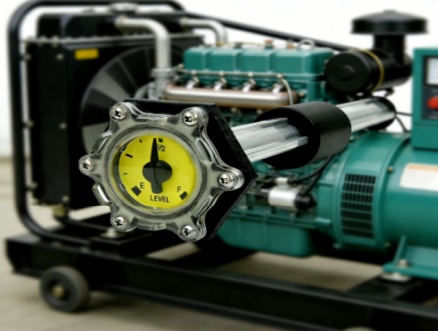
A mechanical level gauge is a device that measures and displays the level of liquid inside a tank using physical movement rather than electronic sensors. Most designs rely on a float mechanism connected to a pointer or indicator through a linkage or magnetic coupling system.
A float rests on the liquid surface
As the liquid level changes, the float moves up or down
This movement is transmitted to an external indicator
The indicator displays the liquid level in real time
Float and tape level gauges
Magnetic float level gauges
Dial-type mechanical indicators
These systems are valued for their simplicity, durability, and ease of installation.
Chemical storage environments are often more demanding than they appear. Beyond simply holding liquid, storage tanks must operate safely under conditions that may include corrosive substances, fluctuating temperatures, pressure variations, and strict regulatory requirements. In such environments, choosing the right level measurement solution is critical. A mechanical level gauge stands out as a reliable and practical option, especially for facilities that prioritize stability, safety, and long-term cost control.
One of the most significant advantages of a mechanical level gauge is its independence from electrical systems. In many chemical plants, uninterrupted monitoring is essential. Power failures, electrical interference, or system malfunctions can compromise electronic measurement devices, potentially leading to inaccurate readings or even hazardous situations. Mechanical systems eliminate this risk by relying on physical movement rather than electrical signals, ensuring continuous operation even in unstable conditions.
Another important benefit is low maintenance. Mechanical level gauges are designed with relatively simple structures, typically involving floats, linkages, and indicators. With fewer electronic components, there is less risk of circuit failure, sensor drift, or software-related issues. This simplicity translates into easier inspection, faster repairs, and reduced downtime. For facilities managing multiple tanks, this can significantly lower overall maintenance costs and improve operational efficiency.
Cost-effectiveness is also a key consideration. While advanced electronic level measurement systems offer high precision and digital integration, they often come with higher upfront costs and ongoing maintenance expenses. Mechanical level gauges provide a more economical alternative for applications where ultra-high precision is not required. They deliver consistent and reliable performance without the need for complex calibration or specialized technical support, making them an attractive choice for many industrial users.
In addition, mechanical level gauges can be adapted to harsh environments when constructed with appropriate materials. Chemical storage tanks may contain acids, alkalis, solvents, or other aggressive substances that can degrade standard materials. By selecting corrosion-resistant materials such as stainless steel or specially coated components, mechanical gauges can maintain their integrity and functionality over extended periods. This adaptability makes them suitable for a wide range of chemical applications, from basic storage to more demanding industrial processes.
Selecting the right mechanical level gauge requires more than a basic understanding of the product. It involves a detailed evaluation of the specific operating conditions and performance requirements. Each application presents unique challenges, and overlooking key factors can lead to inaccurate readings, reduced lifespan, or even system failure.
The properties of the stored chemical play a fundamental role in determining the appropriate gauge. Factors such as corrosiveness, viscosity, and density must be carefully considered. For example, highly corrosive chemicals require materials that resist chemical attack, while viscous liquids may affect the movement of the float. Ensuring compatibility between the gauge materials and the stored substance is essential for long-term reliability.
The dimensions and geometry of the storage tank directly influence the selection of the gauge. Taller tanks require longer measurement ranges, while irregular shapes may require customized solutions. The placement of the gauge must also allow for accurate and consistent readings across the full range of liquid levels.
Chemical storage systems often operate under extreme conditions. High temperatures can affect material strength and measurement accuracy, while pressure variations can impact structural integrity. Choosing a gauge designed to withstand these conditions ensures stable performance and reduces the risk of failure.
Not all applications require the same level of precision. Some processes only need general level indication, while others demand more accurate measurements for process control. Understanding the required level of accuracy helps in selecting the most suitable gauge type and design.
Ease of installation and maintenance is another important consideration. A gauge that is difficult to access may increase maintenance time and costs. Proper planning of installation location and accessibility ensures that inspections and repairs can be carried out efficiently.
Parameter | Why It Matters | Recommended Approach |
Chemical Compatibility | Prevents corrosion and failure | Select resistant materials |
Tank Height | Determines measurement range | Match gauge length to tank size |
Temperature | Affects durability and accuracy | Use high-temperature designs |
Pressure | Impacts structural strength | Choose reinforced models |
Accuracy Needs | Defines reading precision | Select appropriate indicator type |
Maintenance Access | Ensures long-term usability | Prefer easy-access installations |
This table illustrates how each parameter directly influences performance. Matching these factors with the correct product specifications is essential for achieving reliable and safe operation.
Even with experience, users can make selection mistakes that negatively impact system performance. Being aware of these common issues can help prevent costly errors.
One of the most frequent mistakes is choosing materials that are not compatible with the stored chemical. Over time, corrosion can weaken components, leading to leaks, inaccurate readings, or complete failure. This not only affects performance but also introduces safety risks.
Environmental factors such as temperature fluctuations, pressure changes, and exposure to external elements can significantly affect gauge performance. Failing to account for these conditions may result in reduced accuracy or shortened equipment lifespan.
While cost is always an important factor, selecting a mechanical level gauge solely based on price can lead to long-term problems. Lower-cost options may lack the durability or precision required for demanding applications, resulting in higher maintenance costs and potential downtime.
Improper installation is another common issue. Poor placement can make readings difficult to interpret or cause mechanical interference that affects accuracy. Ensuring correct positioning and alignment during installation is essential for optimal performance.
Some users overlook the importance of regular maintenance. Even though mechanical gauges are relatively low-maintenance, periodic inspection and cleaning are still necessary to ensure smooth operation and accurate readings.
The internal structure and manufacturing quality of a mechanical level gauge directly affect its reliability.
High-quality stainless steel or corrosion-resistant alloys improve durability.
Proper sealing prevents leakage and contamination.
Well-designed floats and linkages ensure smooth and accurate movement.
At Dongguan Dalang Aoer Parts Ltd., we focus on optimizing these aspects to ensure consistent performance in demanding industrial environments.
Selecting the right mechanical level gauge is not just about choosing a measurement tool—it is about ensuring safety, efficiency, and long-term reliability in chemical storage operations. By carefully evaluating factors such as chemical compatibility, tank conditions, accuracy requirements, and build quality, users can avoid common pitfalls and achieve more stable monitoring performance.
At Dongguan Dalang Aoer Parts Ltd., we understand the practical challenges faced in industrial environments. Our experience in manufacturing and supplying mechanical tank level indicators allows us to support customers with solutions that balance durability, precision, and cost-effectiveness. If you are looking for a reliable option for your chemical storage system, we welcome you to contact us for more information.
1. What is a Mechanical Level Gauge used for?
It is used to measure and display the liquid level in tanks without relying on electronic systems.
2. Are mechanical level gauges suitable for corrosive chemicals?
Yes, if made from compatible materials such as stainless steel or coated alloys.
3. How accurate is a Mechanical Level Gauge?
Accuracy depends on design and application, but it is generally sufficient for most industrial needs.
4. How often should a Mechanical Level Gauge be maintained?
Regular inspections and cleaning are recommended to ensure long-term performance and reliability.


