close
Choose Your Site
Global
Social Media
Author: Site Editor Publish Time: 2026-05-19 Origin: Site
Marine environments are uniquely hostile to instrumentation. Vessel owners, engineers, and fleet operators face a critical choice when monitoring fuel, water, and engine fluids. You must decide whether to trust traditional physical mechanisms or upgrade to digital electronics. The decision often comes down to balancing modern dashboard convenience against disaster-recovery reliability. You want a power-independent system during sudden electrical emergencies. However, you also need clear, accessible monitoring during calm navigation. We will explore these monitoring solutions in depth. This article provides a clear, engineering-backed evaluation of both technologies. We aim to help buyers make an informed procurement decision. We base this evaluation strictly on safety, vessel type, and operational reality. By understanding the distinct advantages of each setup, you can better protect your crew and equipment. You will learn how to build a robust monitoring architecture tailored to your specific maritime needs.
Mechanical Level Gauges provide fail-safe, power-independent monitoring, making them essential for disaster recovery and real-time troubleshooting during electrical failures.
Electronic Sensors excel in routing convenience, integrating with critical safety alarm systems, and mitigating the risk of high-pressure fluids entering the helm.
Marine Best Practice: The industry standard for critical tanks is a redundant approach—utilizing electronic displays at the helm supported by mechanical gauges directly on the tank.
Slosh Mitigation: Both systems require physical interventions (like stilling tubes) to deliver accurate readings in rough seas.
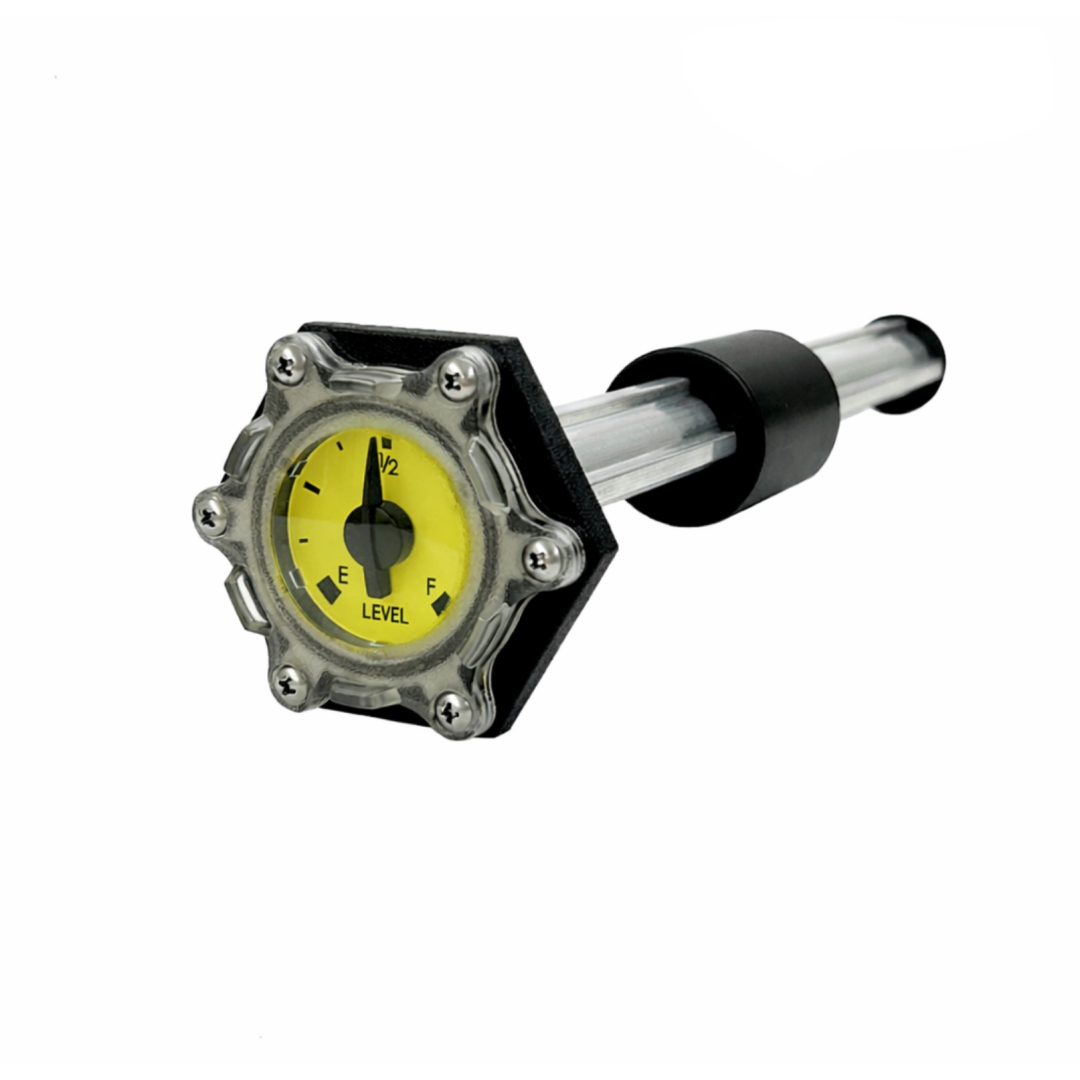
Physical measurement tools form the backbone of traditional marine engineering. A reliable Mechanical Level Gauge relies on direct physical mapping. These instruments do not interpret data through software. Instead, they use floats, gear-and-shaft assemblies, or Bourdon tubes. For temperature and pressure readings, a Bourdon tube physically expands as internal fluid pressure increases. This mechanical expansion directly drives a needle across a dial. You get an instantaneous, unadulterated reading of tank conditions.
Despite their rugged nature, these physical mechanisms possess specific vulnerabilities. They remain highly susceptible to physical blockage. Sludge or debris can trap a float arm inside a dirty fuel tank. Furthermore, sustained engine vibration routinely loosens internal springs. Heavy maritime diesel engines produce high-frequency vibrations. Over years of service, these vibrations degrade gear assemblies. Additionally, temperature and pressure units use sealed capillary tubes. These tubes have strictly limited lengths. You cannot cut them. You cannot extend them. This limitation heavily restricts where you can mount the display.
Digital instrumentation modernizes how crews interact with vessel data. Engineers employ various technical approaches to capture fluid metrics digitally. These setups transmit low-voltage signals to sleek dashboard displays.
Variable Resistor Sensors: A float moves an arm across a resistor board. This alters the electrical current sent to the gauge.
Ultrasonic Tracking: A sensor bounces sound waves off the fluid surface. It calculates volume based on the echo return time.
Capacitance Probes: Two conductive probes measure the changing electrical capacitance of the fluid as levels rise and fall.
Choosing an Electronic Sensor provides digital convenience but introduces severe environmental vulnerabilities. Salt-air corrosion aggressively destroys unprotected circuit boards. Software glitches occasionally freeze digital displays. More critically, a complete vessel power failure instantly blacks out the entire monitoring system. Capacitance models face unique physics challenges. Standard metal marine fuel tanks act as Faraday cages. They routinely block or distort signals for external capacitance sensors. This forces engineers to drill into the tank for internal probe placement.
Bringing a mechanical oil pressure or temperature gauge to the dashboard creates substantial hazards. This process often requires routing pressurized fluid lines directly into the cabin. A cracked plastic or copper line causes catastrophic leaks. High-pressure oil spraying into a closed helm endangers the crew. It also starves the engine of vital lubrication.
Electronic sensors offer a profound advantage regarding cabin safety. They only route low-voltage electrical wiring to the helm. They completely eliminate fluid-in-cabin hazards. If a wire chafes or breaks behind the dashboard, the gauge simply reads zero. You lose the data, but you keep the fluid safely inside the engine room. This architectural shift significantly improves passenger safety.
We must evaluate disaster recovery capabilities carefully. Mechanical gauges act as "always on" monitors. Purely physical gauges require zero electricity. They provide real-time fluid diagnostics even when the engine is off. If the main battery system fails completely, your mechanical pressure gauge still reads accurately. This power independence makes them vital for emergency troubleshooting.
Conversely, electronic units excel at active safety auditing. Digital screens integrate seamlessly with critical "Idiot Lights" or audio buzzers. Drivers rarely stare at gauges during intense navigation. An audible alarm provides a mandatory safety layer for sudden pressure drops or overheating events. A loud buzzer warns the captain seconds before catastrophic engine failure.
Rough seas challenge every monitoring technology. "Slosh" causes rapid, violent fluid movement inside tanks. Both technologies require interventions to deliver accurate readings.
Hardware fixes remain necessary for both systems. Marine engineers install baffles inside large tanks to break up wave energy. Additionally, they enclose sensors inside "stilling tubes." A stilling tube is a perforated cylinder. It allows fluid to enter slowly while dampening the violent surface movement. This stabilizes the fluid surface for both mechanical floats and digital probes.
Software fixes provide an extra layer of stability for digital setups. Premium electronic setups utilize advanced mode-filtering algorithms. Instead of updating the display every second, the software takes rapid sample sets. It might take 29 odd-numbered samples in a few seconds. The algorithm filters out the extreme highs and lows. It then displays the statistical mode. This stabilizes dash readings dramatically during storms.
Evaluation Metric | Mechanical Gauge Output | Electronic Sensor Output |
|---|---|---|
Cabin Fluid Risk | High (Pressurized lines enter helm) | Zero (Low-voltage wiring only) |
Power Dependency | None (100% independent) | High (Fails during blackouts) |
Active Alarms | None (Requires constant visual check) | High (Supports buzzers and lights) |
Slosh Management | Hardware Only (Stilling tubes) | Hardware + Software (Algorithms) |
Upgrading older boats presents unique engineering challenges. Mechanical gauges prove highly practical for older hulls. Complex electrical rewiring is often cost-prohibitive. Pulling new marine-grade wiring harnesses through decades-old fiberglass channels consumes massive labor hours. Sometimes, the existing electrical architecture simply cannot support modern NMEA 2000 digital networks.
Physical gauges serve as direct, plug-and-play replacements for aging infrastructure. You can swap an old mechanical float unit for a new one in minutes. You avoid touching the electrical panel entirely. For classic wooden boats or aging commercial fishing vessels, this simplicity preserves operational budgets.
Modern vessel architecture prioritizes sleek, densely packed dashboards. Post-1980s vessels feature highly integrated helms. Navigation screens, radar displays, and autopilot modules compete for limited real estate. Routing thick mechanical fluid lines behind these modern dashes is incredibly difficult. Copper tubing does not bend easily around tight corners.
In contrast, pulling thin electronic wiring harnesses through tight bulkheads is straightforward. Flexible digital cables navigate sharp angles easily. A single digital screen can display data from multiple sensors simultaneously. This multi-page display capability cleans up the dashboard. It provides captains with a highly organized, distraction-free command center.
Smart marine engineers refuse to compromise on safety. Frame the ultimate solution not as an "either/or" choice. Instead, build a robust dual-layer architecture. This strategy combines the convenience of digital networks with the invulnerability of physical physics.
Your primary helm display should utilize modern electronics. Connect digital sensors to dash screens and audible buzzers. This provides immediate, convenient navigation awareness. The captain enjoys active alarms and easy-to-read graphical interfaces while underway. The digital system handles day-to-day operational convenience flawlessly.
Simultaneously, install an engine or tank room backup. Mount a rugged Mechanical Level Gauge directly at the fluid source. This component acts as your absolute, un-hackable truth source. When lightning strikes the vessel, digital screens go blank. When software updates fail, sensors read errors. During these crises, the engineer walks down to the tank room. The physical gauge provides an undeniable, highly accurate reading. This redundant approach represents the gold standard for maritime safety.
Not all physical instruments survive the ocean. The maritime environment actively attempts to destroy metal and plastic. When building your redundant system, you must select hardware carefully. Look for a reputable Mechanical Level Gauge manufacturer that understands offshore abuse. Use this strict procurement checklist.
Material Integrity: Ensure the manufacturer uses highly corrosion-resistant materials. They should use marine-grade 316 stainless steel for external housings. Verify they specify IP67 or higher waterproof ratings to protect against complete submersion.
Customization Capabilities: Look for a vendor offering bespoke configurations. You need custom float materials depending on the fluid. Harsh waste tanks require different plastics than clean diesel fuel. They should also offer custom length configurations and optional high/low limit switch additions.
Vibration Testing: Verify the internal components are rated for high-frequency maritime engine vibration. Standard industrial gauges rattle apart on boats. The internal gears and Bourdon tubes must feature dedicated shock dampening.
To simplify vendor assessment, utilize the following capability chart during your procurement process.
Manufacturer Criteria | Standard Industrial Capability | Required Marine Capability |
|---|---|---|
Waterproofing Standard | IP65 (Splash proof) | IP67 or IP68 (Submersion proof) |
Primary Materials | Brass / Polycarbonate | 316 Stainless Steel / Glass |
Length Configurations | Fixed catalogue sizes | Bespoke custom lengths |
Float Material Options | Standard Nitrile | Chemical-resistant composites |
Electronic sensors are the superior choice for helm convenience and active alarm safety. They keep dangerous fluids out of the cabin while providing intelligent, multi-screen data. However, the purely physical gauge remains irreplaceable as a primary backup. It offers unparalleled reliability when the vessel's electrical grid fails.
Take immediate action to secure your vessel:
Audit your vessel's current monitoring system to identify critical failure points.
Upgrade your helm displays to incorporate audible buzzers for active safety.
Source a high-quality physical gauge to mount directly at the tank level.
Establish a marine-grade redundant system to protect against total power loss.
A: External non-contact sensors often fail on iron or thick metal tanks due to severe signal blocking. The metal acts as a shield against capacitance and ultrasonic waves. Internal mechanical floats or direct-contact electronic senders are strictly required for accurate readings in these environments.
A: Purely mechanical float and Bourdon tube gauges require zero electricity. They will continue to display accurate fluid levels and system pressures. This inherent trait makes them absolutely vital for emergency troubleshooting during total vessel blackouts.
A: With proper maintenance, a high-quality mechanical gauge can reliably operate for 5 to 10 years in harsh marine conditions. You must prevent salt-crystal buildup on moving parts. You must also ensure proper vibration dampening to protect the internal springs.