close
Choose Your Site
Global
Social Media
Author: Site Editor Publish Time: 2026-07-23 Origin: Site
Inaccurate level measurement in harsh or sanitary environments persistently plagues facility operators. This unreliability often leads to severe batch waste, strict compliance failures, and costly unplanned downtime. Many plants traditionally relied on mechanical float switches to monitor liquid levels. However, these physical moving parts frequently fail when exposed to corrosive chemicals or viscous food products. Modern solid-state capacitive measurement offers a highly robust alternative. It completely removes mechanical wear from the measurement equation. The purpose of this article is to provide process engineers and plant managers with a comprehensive evaluation framework. We will guide you through deploying capacitive technology effectively across demanding chemical and food or beverage applications. You will learn how to accurately match sensor specifications with complex industrial media requirements.
Material Compatibility: PTFE-coated probes offer maximum resistance to highly corrosive chemical agents.
Sanitary Compliance: Flush-mounted and gap-free sensor designs meet strict FDA and 3-A sanitary standards for food processing (CIP/SIP).
Risk Mitigation: Advanced capacitive sensors actively compensate for material buildup and shifting dielectric constants.
Vendor Selection: Partnering with an experienced capacitive level sensor manufacturer is critical for securing proper certifications (ATEX/Ex) and custom probe configurations.
Extreme environments quickly expose the weaknesses of traditional mechanical sensors. False triggers frequently cause catastrophic pump burnout. Unhygienic crevices often harbor dangerous bacteria in dairy tanks. These hidden failures disrupt production operations constantly. They also trigger severe regulatory penalties. Facilities need smarter sensing strategies.
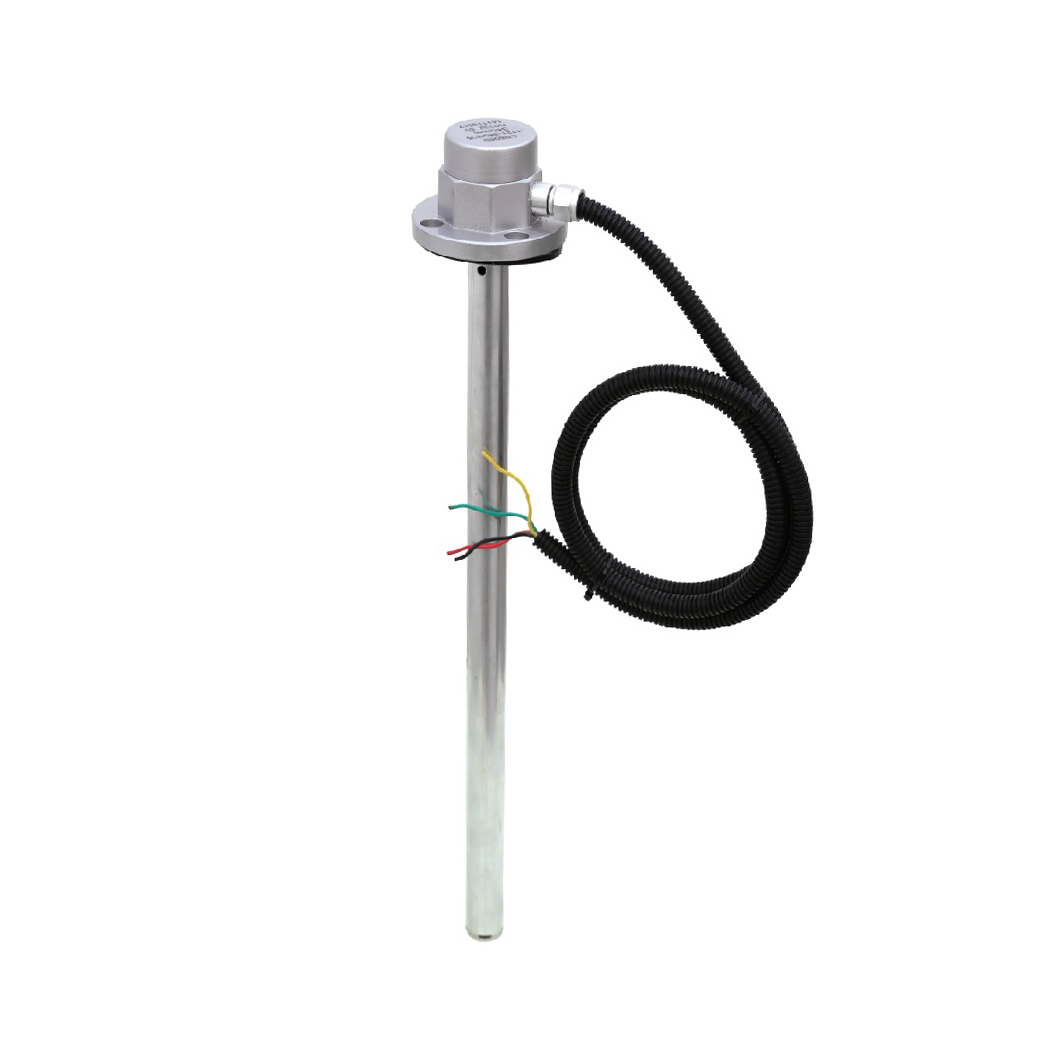
A Capacitive Level Sensor relies entirely on solid-state electronics. It possesses absolutely no moving parts. This architectural advantage drastically reduces mechanical wear. You spend far less time on emergency maintenance. Process engineers can finally trust their automated control loops. Reliable level data prevents dangerous tank overflows.
We must ground this technology in fundamental physics. It measures electrical capacitance changes between a probe and the tank wall. Target media must have a predictable dielectric constant. Liquids, pastes, and bulk solids act as insulators within this electrical field. Their specific dielectric values directly determine measurement reliability. If the dielectric constant fluctuates wildly, your baseline measurements will skew.
Many industrial facilities manage massive storage tanks holding fierce acids, bases, and aggressive solvents. Standard metallic probes dissolve rapidly in these environments. You must specify chemically inert housings. PTFE or PFA insulated probes effectively prevent structural degradation. They provide an impenetrable physical barrier against harsh corrosive attacks. This guarantees long-term operational stability. Process engineers commonly deploy these resilient sensors in sulfuric acid and sodium hydroxide storage applications.
The chart below summarizes material selection criteria for highly aggressive chemical environments.
Chemical Media Type | Recommended Probe Insulation | Primary Benefit |
|---|---|---|
Strong Acids (e.g., Sulfuric, Hydrochloric) | PTFE (Polytetrafluoroethylene) | Exceptional chemical inertness and high-temperature tolerance. |
Aggressive Solvents (e.g., Toluene, Benzene) | PFA (Perfluoroalkoxy Alkane) | Prevents permeation and withstands severe chemical attacks. |
Mild Alkalis & Bases | PEEK (Polyether Ether Ketone) | Provides superior mechanical strength alongside moderate chemical resistance. |
Petrochemical processing routinely generates volatile, highly combustible vapors. This demands absolute adherence to strict regulatory compliance. You cannot compromise on facility safety. Facilities strictly mandate intrinsically safe equipment designs. Engineers must look for rigorous ATEX or IECEx certifications. These certifications guarantee the sensor cannot ignite ambient explosive gases. They strictly limit the electrical energy available at the sensor probe. This prevents deadly sparks during sudden electrical fault conditions.
Chemical reactors experience extreme, rapid process variations. Specialized capacitive probes must maintain complete structural integrity under duress. They must also deliver flawless signal accuracy under intense physical stress. Heavy-duty ceramic seals and reinforced probe architecture are necessary here. They actively prevent high-pressure blowouts during volatile chemical reactions. If a seal fails, hazardous materials could breach the sensor housing. This makes specialized mechanical engineering just as critical as the internal electronics.
Food plants require continuous level monitoring of heavy syrups, dairy, chocolate, and edible oils. These sticky materials constantly cling to conventional measurement devices. This dense buildup generates intense parasitic capacitance. The system incorrectly registers this as a high liquid level. We solve this problem using active shield technology. Guard electrodes actively ignore the sticky coating. They project a compensatory electrical field. This ensures the main sensor only measures the actual bulk liquid level.
Food safety mandates frequent, aggressive washdowns. Operators regularly use high-temperature steam and caustic chemicals during CIP (Clean-in-Place) and SIP (Sterilization-in-Place) cycles. Equipment must feature strictly FDA-approved materials. Strict adherence to EHEDG guidelines ensures a seamless, crevice-free installation.
To deploy these sensors safely in sanitary applications, process engineers should follow these evaluation steps:
Verify FDA and 3-A material compliance for all wetted components.
Confirm the specific CIP/SIP temperature limits of the selected sensing probe.
Assess the media viscosity to determine if active guard shielding is necessary.
Select flush-mounted process connections to eliminate hygienic dead zones.
You can reliably detect the exact interface between two immiscible liquids. A Capacitive Level Sensor distinguishes oil and water very easily. They possess vastly different dielectric values. Water typically reads around 80. Oil measures roughly 2 on the dielectric scale. The sensor accurately tracks where this stark dielectric transition occurs. This enables precise automated skimming. Facilities use this extensively for wastewater treatment and edible oil refinement.
No industrial measurement technology is perfect. We must objectively assess field implementation risks. Identifying these constraints early prevents costly commissioning delays.
The dielectric constant rarely stays perfectly static. Changes in ambient temperature or humidity can alter it slightly. Mixture composition variations also skew baseline readings. For example, adding heavy conductive salts to a previously non-conductive mixture changes the electrical profile completely. You must account for these environmental shifts during initial system design. Modern smart sensors sometimes feature dynamic compensation algorithms to counter this.
Precise commissioning is absolutely necessary for success. You must perform accurate empty and full tank calibrations upon installation. This establishes the baseline capacitance range. Skipping this critical step guarantees unreliable operational data. The system needs to learn the exact electrical signature of your specific tank environment.
Internal tank structures pose a major interference risk. Metallic agitators, heating coils, or narrow tank walls can disrupt the sensing electrical field. You can mitigate this risk via proper installation clearances. Always keep probes away from moving metal parts. Alternatively, you can use concentric tube probe designs. They confine the measurement field entirely within the outer metallic tube. This ignores all external tank interference completely.
Off-the-shelf catalog solutions often fail in extreme environments. Your complex application demands exact engineering specifications. You need a Capacitive Level Sensor manufacturer who offers deep custom fabrication capabilities. They should gladly supply custom probe lengths, specific regional thread types, and specialized anti-corrosion coatings. Standard lengths rarely fit perfectly into customized chemical reactors.
Do not rely on vague marketing claims. Demand clear, empirical testing documentation from your supplier. Look for proven MTBF (Mean Time Between Failures) data. Request verifiable pressure tests and official third-party compliance certificates.
When evaluating a potential vendor, always request the following validation items:
Detailed Material Test Reports (MTR) for all metallic wetted components.
Dielectric constant reference charts customized for your specific chemical mixtures.
Comprehensive case studies demonstrating successful deployment in similar tank geometries.
Valid ATEX/IECEx certificates if deploying in hazardous zones.
Hardware represents only one part of the purchasing equation. Evaluate the vendor's long-term technical capabilities. You will eventually need responsive post-sale support. Calibration assistance and robust warranty terms are essential. They minimize future operational disruptions. A reliable partner helps troubleshoot tricky parasitic capacitance issues remotely. They ensure your facility maintains optimal production uptime.
A capacitive level sensing system is remarkably adaptable. However, its operational success hinges on one critical factor. You must perfectly match the exact probe material and internal electronics to your specific chemical or food process. Ignoring these nuances invites rapid mechanical failure and inaccurate data. Implementing active shielding and PTFE coatings drastically improves reliability in harsh applications. Take proactive steps today. Document your specific media's dielectric constant. Record your operating temperature ranges and exact internal tank dimensions. Once you gather these parameters, contact your specialized engineering team. You should request a deep technical consultation or secure a pilot unit for immediate field validation.
A: Most industrial capacitive sensors require a minimum dielectric constant of roughly 1.5. Target media like highly purified water or aggressive acids measure much higher, ensuring easy detection. However, non-conductive materials like dry bulk plastics hover near this 1.5 threshold. You must consult your vendor if your medium approaches this lower limit.
A: Advanced sensors utilize active shielding, often called guard electrode technology. This secondary electrode generates an electrical field matching the main sensing probe. It effectively cancels out the parasitic capacitance caused by sticky syrup or dairy clinging to the probe. The sensor then only reads the actual bulk liquid level.
A: Yes, they are highly suitable for flammable environments. However, they must be explicitly specified with explosion-proof housings or intrinsically safe electrical ratings. You must ensure the device carries valid ATEX, IECEx, or FM certifications to guarantee it will not ignite volatile chemical vapors under any fault conditions.
A: Continuous measurement provides real-time, analog fluid monitoring. It typically outputs a proportional 4-20mA signal representing the entire tank level from empty to full. Conversely, a point level switch acts as a binary trigger. It provides a simple PNP/NPN digital switching output to indicate when liquid hits one specific high or low point.