

close
Choose Your Site
Global
Social Media
Author: Site Editor Publish Time: 2026-04-10 Origin: Site
In marine environments, reliability is not optional—it is essential. Every component installed on a vessel must perform consistently under challenging conditions such as vibration, humidity, salt exposure, and temperature fluctuations. Among these components, the mechanical level gauge plays a critical role in monitoring liquid levels in fuel tanks, ballast systems, and storage compartments. From our experience working with customers in marine and industrial sectors, we understand that selecting the right mechanical level gauge supplier is just as important as choosing the product itself. A reliable supplier ensures not only product quality but also long-term performance, compliance, and support.
When customers approach us, they are often not just looking for a standard product. They want a supplier who understands marine requirements, offers stable quality, and can adapt to project-specific needs. In this article, we will explain what to look for in a mechanical level gauge supplier for marine applications, helping you make a more informed and confident decision.
Marine systems operate in environments where failure can lead to operational disruptions, safety risks, or costly maintenance. A mechanical level gauge is often a simple device in principle, but in practice, it must withstand harsh conditions while providing accurate and reliable readings over time.
Choosing the right supplier impacts:
Measurement accuracy
Product durability
Compliance with marine standards
Maintenance frequency
Overall system reliability
A well-qualified supplier helps reduce long-term risk and ensures that the level gauge performs consistently throughout its service life.
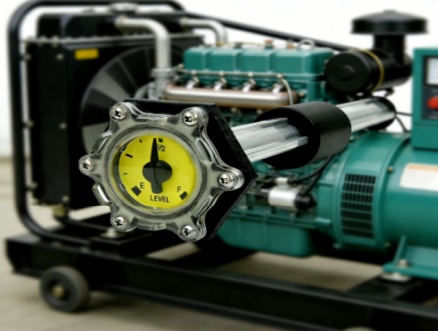
Selecting the right mechanical level gauge supplier for marine applications requires more than comparing basic specifications or pricing. From our experience working with customers across marine and industrial sectors, the reliability of a level gauge is closely tied to the supplier’s overall capability—ranging from material selection and production control to technical support and long-term service. In harsh marine environments, even small weaknesses in design or manufacturing can lead to performance issues over time. That is why a comprehensive evaluation approach is essential.
One of the first and most critical aspects to evaluate is the quality of materials used in the mechanical level gauge. Marine environments are highly corrosive due to continuous exposure to saltwater, humidity, and temperature variation. If materials are not carefully selected, corrosion and degradation can occur quickly, reducing product lifespan and reliability.
Suppliers should use high-quality materials such as stainless steel or specialized corrosion-resistant alloys. In addition, attention should be paid to sealing components and internal parts that may also be exposed to harsh conditions.
Key material considerations include:
Corrosion resistance
Mechanical strength under load
Compatibility with different liquids (fuel, water, chemicals)
Resistance to temperature fluctuations
A reliable supplier will clearly specify material grades, provide test reports, and demonstrate compliance with relevant standards. Transparency in material selection is often a strong indicator of product reliability.
Although mechanical level gauges are known for their simple and robust design, accuracy remains a key performance factor. In marine systems, inaccurate readings can lead to incorrect fuel calculations, imbalance in tank levels, or inefficient operational planning.
A qualified supplier should ensure:
Stable and repeatable measurement performance
Clear calibration standards and procedures
Consistent output across production batches
Even slight inconsistencies in measurement can accumulate over time, especially in systems where multiple tanks are involved. From our perspective, stable performance is not achieved by design alone but also through controlled manufacturing and quality testing.
Evaluation Factor | What to Look For | Why It Matters |
Material Quality | Stainless steel, corrosion-resistant materials | Ensures long-term durability |
Measurement Accuracy | Stable and consistent readings | Improves operational reliability |
Manufacturing Process | Controlled production and testing | Reduces defects |
Customization Capability | Flexible design options | Meets specific project needs |
Technical Support | Responsive communication | Helps solve application issues |
Manufacturing capability is one of the most important indicators of a supplier’s reliability. A supplier with strong process control can ensure that each mechanical level gauge meets the same performance and quality standards.
Look for suppliers that demonstrate:
Standardized production procedures
Advanced or well-managed manufacturing equipment
Strict quality inspection systems
Experience with marine-grade products
Ability to maintain consistency across large production batches
Inconsistent production can lead to variations in measurement accuracy, structural integrity, or durability. Suppliers with mature manufacturing systems are more likely to deliver stable and repeatable products, which is especially important for large-scale marine projects.
Marine systems are rarely standardized. Different vessels have different tank sizes, shapes, installation spaces, and operational requirements. As a result, a one-size-fits-all approach is often insufficient.
A capable mechanical level gauge supplier should offer customization options, including:
Different measurement ranges
Various mounting configurations (top-mounted, side-mounted, etc.)
Material variations for different environments
Compatibility with specific tank designs or space constraints
This flexibility allows engineers to integrate the level gauge more effectively into their systems, reducing installation challenges and improving overall performance. From our experience, customization is often the key to solving complex application problems.
Marine equipment is often subject to industry standards, certifications, and regulatory requirements. While not all applications require formal certification, a supplier familiar with marine standards is better positioned to deliver suitable products.
Important aspects to consider include:
Understanding of marine operating conditions
Compliance with relevant industry standards
Availability of documentation and traceability records
Even when certification is not mandatory, suppliers with marine experience are more likely to design products that can withstand real-world conditions. This reduces the risk of premature failure and improves system reliability.
Durability is a key concern in marine environments where maintenance access may be limited and operational downtime is costly. A reliable mechanical level gauge should maintain performance over long periods with minimal intervention.
Key durability factors include:
Resistance to corrosion and wear
Stable mechanical structure under vibration
Long service life
Minimal need for recalibration or adjustment
From our perspective, durability is influenced not only by material quality but also by design precision and manufacturing consistency. Well-designed products are more likely to maintain performance even under continuous operation and harsh environmental exposure.
A strong supplier relationship goes beyond product delivery. Technical support and communication play a crucial role in ensuring successful project execution and long-term satisfaction.
When evaluating a supplier, consider:
Responsiveness to technical inquiries
Ability to provide detailed documentation and drawings
Willingness to support customization and problem-solving
Experience in handling application-specific challenges
Clear and effective communication helps prevent misunderstandings, reduces project delays, and ensures that the selected mechanical level gauge meets actual operational requirements.
Even with high-quality products, marine environments present several challenges:
Corrosion from saltwater exposure
Vibration from engine and wave motion
Temperature variations
Limited installation space
A capable supplier understands these challenges and designs mechanical level gauges accordingly. This includes selecting suitable materials, optimizing structural design, and ensuring reliable operation under real-world conditions.
When comparing different mechanical level gauge suppliers, it is helpful to evaluate them based on multiple criteria rather than focusing only on price.
Criteria | Basic Supplier | Reliable Supplier |
Material Quality | Standard materials | Marine-grade materials |
Product Consistency | Variable | Stable and controlled |
Customization | Limited | Flexible options |
Technical Support | Minimal | Comprehensive |
Application Experience | General | Marine-specific expertise |
From our perspective, a slightly higher initial cost often leads to better long-term value when working with a reliable supplier.
Choosing the right mechanical level gauge supplier for marine applications is not just a purchasing decision—it is a long-term investment in system reliability and operational stability. From material selection and manufacturing capability to customization and technical support, each factor plays a role in determining the overall performance of the product. In marine environments where conditions are harsh and expectations are high, working with a capable and experienced supplier can make a significant difference.
From our perspective, the most successful projects are those where customers focus not only on specifications but also on supplier capability and consistency. If you are evaluating options for mechanical level gauge solutions in marine applications, you can learn more from Dongguan Dalang Aoer Parts Ltd. Their experience in manufacturing and application support can help you select the right products and achieve reliable performance in demanding environments. If needed, you may also contact this company for further product details and technical assistance.
A mechanical level gauge is used to measure liquid levels in tanks such as fuel tanks, ballast tanks, and storage systems on ships.
Material selection affects corrosion resistance, durability, and long-term performance, especially in marine environments exposed to saltwater.
You should consider product quality, manufacturing capability, customization options, technical support, and experience in marine applications.
Yes, many reliable suppliers offer customization options such as measurement range, mounting design, and material selection to meet specific requirements.


