

close
Choose Your Site
Global
Social Media
Author: Site Editor Publish Time: 2026-04-20 Origin: Site
In portable generator applications, fuel management is one of the most critical yet often overlooked aspects of performance and reliability. Whether used on construction sites, outdoor events, emergency backup systems, or remote locations, generators must operate continuously and predictably. One of the simplest and most effective ways to monitor fuel levels in these environments is through a mechanical level gauge. Unlike electronic systems that rely on sensors, wiring, and power input, mechanical liquid level gauges provide direct, real-time readings without external dependencies. In our experience as a manufacturer of precision components, mechanical gauges offer a practical and reliable solution for portable generators, especially in conditions where durability, simplicity, and ease of use are essential. Understanding why these gauges are widely used helps equipment manufacturers, distributors, and end users make better decisions when selecting fuel monitoring solutions.
A mechanical level gauge is a device used to measure and display the level of liquid—typically fuel—inside a tank. It operates using physical components such as floats, linkages, or magnetic systems to indicate the liquid level directly.
Unlike electronic gauges, mechanical gauges do not require:
Electrical power
Complex circuitry
Software calibration
This makes them particularly suitable for portable generator applications, where simplicity and reliability are key.
Portable generators are often deployed in environments where a consistent and uninterrupted power supply is essential. These environments can range from construction sites and outdoor events to emergency backup systems and remote industrial operations. In such scenarios, even a brief interruption caused by fuel depletion can have significant consequences. Equipment may shut down unexpectedly, critical tasks may be delayed, and in some cases, safety risks may arise—especially when generators are supporting essential systems such as lighting, communication devices, or medical equipment.
Accurate fuel monitoring is therefore not just a convenience; it is a fundamental requirement for reliable generator operation. Without a clear understanding of fuel levels, operators may rely on guesswork, which increases the likelihood of unexpected shutdowns. This can disrupt workflows, increase operational costs, and create inefficiencies that are difficult to manage in time-sensitive situations.
There are several key reasons why precise fuel monitoring is so important:
Preventing unexpected shutdowns that can interrupt operations
Planning refueling schedules to maintain continuous performance
Improving operational efficiency by reducing uncertainty
Reducing downtime associated with fuel-related interruptions
Enhancing overall equipment reliability and lifespan
A dependable mechanical level gauge plays a crucial role in achieving these goals. By providing a clear, real-time indication of fuel levels, it allows operators to make informed decisions quickly and confidently. This is especially valuable in environments where time, safety, and reliability are critical.
Mechanical level gauges offer several advantages that make them particularly well-suited for portable generator applications. Their design focuses on simplicity, durability, and practicality, all of which are essential in demanding working conditions.
One of the most significant advantages of a mechanical level gauge is its inherent simplicity. Unlike electronic systems, which rely on sensors, wiring, and power sources, mechanical gauges operate through direct physical mechanisms such as floats and linkages. This straightforward design reduces the number of components that could potentially fail.
Feature | Benefit |
No electrical dependency | Works in any condition, even without power |
Simple structure | Easy to install, operate, and maintain |
Direct reading | Provides immediate and intuitive fuel level indication |
Because of this simplicity, mechanical gauges are highly reliable. They do not suffer from issues such as signal interference, software errors, or electrical malfunctions. This makes them especially suitable for portable generators, where reliability is often more important than advanced functionality.
Portable generators are frequently used in outdoor or industrial environments where conditions can be challenging. Dust, vibration, temperature fluctuations, and moisture are common factors that can affect equipment performance.
A mechanical level gauge is designed to withstand these conditions. Its robust construction allows it to operate reliably even when exposed to:
Dust and debris commonly found on construction sites
Continuous vibration from generator operation
Temperature variations in outdoor environments
Humidity and moisture in wet or coastal areas
Since mechanical gauges do not contain sensitive electronic components, they are less vulnerable to environmental damage. This durability ensures consistent performance over time, even in demanding applications.
Another key advantage of mechanical level gauges is their ability to provide immediate visual feedback. Operators can quickly check the fuel level without needing to interpret digital displays or rely on electronic systems.
This feature is particularly valuable in situations where quick decisions are required. For example, during emergency operations or in remote locations, having instant access to fuel level information can help prevent operational disruptions.
Mechanical gauges are especially useful in:
Remote locations where power supply may be unstable
Emergency situations requiring quick response
Low-light conditions where simple visual indicators are easier to read
The ability to monitor fuel levels at a glance improves situational awareness and supports better decision-making during operation.
Cost is always an important consideration in equipment selection, and mechanical level gauges offer a clear advantage in this area. Compared to electronic systems, they are generally more affordable both in terms of initial purchase and long-term maintenance.
Cost Factor | Mechanical Gauge Advantage |
Initial cost | Lower than electronic alternatives |
Maintenance | Minimal and straightforward |
Replacement | Easy and cost-effective |
Long-term reliability | Fewer failures reduce overall costs |
For portable generators, which are often used in multiple locations and conditions, cost efficiency is a significant benefit. Mechanical gauges provide reliable performance without requiring expensive components or complex systems.
Maintenance is another area where mechanical level gauges demonstrate clear advantages. Their simple design means there are fewer parts that require attention, and they do not need regular calibration or software updates.
Typical maintenance tasks include:
Periodic inspection to ensure proper operation
Cleaning if exposed to dirt or debris
Checking for signs of mechanical wear
These tasks are simple and can usually be performed without specialized tools or expertise. As a result, maintenance time and effort are significantly reduced, allowing operators to focus on other aspects of equipment management.
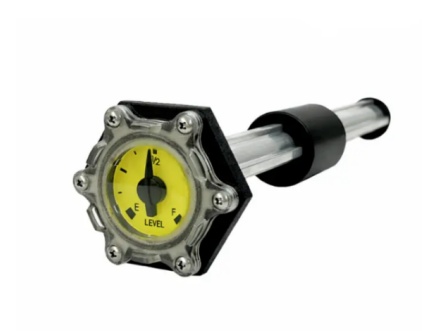
Understanding the differences between mechanical and electronic level gauges helps explain why mechanical solutions are often preferred for portable generators. While electronic systems may offer higher precision and advanced features, they also come with increased complexity and sensitivity to environmental conditions.
Feature | Mechanical Level Gauge | Electronic Level Gauge |
Power requirement | None | Requires electrical input |
Complexity | Simple and robust | More complex system |
Durability | High in harsh environments | More sensitive to conditions |
Maintenance | Low and easy | Higher and more technical |
Accuracy | Reliable for practical use | High precision possible |
Cost | Lower overall | Higher initial and maintenance cost |
While electronic gauges can be beneficial in controlled environments where precision is critical, mechanical gauges provide the reliability, durability, and simplicity needed for portable generator applications. They deliver consistent performance without relying on external systems, making them a practical and dependable choice in real-world conditions.
Mechanical level gauges are widely used in various portable generator scenarios.
Construction sites
Outdoor events
Emergency backup systems
Agricultural operations
Remote industrial locations
In these environments, equipment must function reliably without relying on additional systems.
When selecting a mechanical level gauge for a portable generator, several design factors should be considered.
Tank size and shape
Mounting compatibility
Fuel type (diesel, gasoline, etc.)
Visibility requirements
Environmental exposure
Choosing the right gauge ensures accurate readings and seamless integration with the generator system.
Understanding why mechanical liquid level gauges are ideal for portable generators highlights the importance of choosing the right components for reliable operation. In our experience, a well-designed mechanical level gauge provides consistent performance, easy monitoring, and long-term durability without the complexity of electronic systems. For portable generators used in demanding environments, these advantages translate into reduced downtime, improved efficiency, and greater operational confidence. By selecting a suitable mechanical gauge, users can ensure accurate fuel monitoring and maintain stable generator performance across a wide range of applications.
For those interested in learning more about mechanical level gauge solutions and component options, Dongguan Dalang Aoer Parts Ltd. offers a variety of products designed for practical industrial applications. If you are evaluating reliable fuel monitoring components, it may be worthwhile to explore their offerings and discuss your specific requirements with their team.
A mechanical level gauge is used to monitor the fuel level in a generator’s tank, providing a clear and direct visual indication without requiring electrical power.
Mechanical gauges are preferred because they are simple, durable, cost-effective, and do not rely on electrical systems, making them ideal for harsh or remote environments.
Yes, mechanical level gauges provide reliable and practical accuracy for monitoring fuel levels in portable generators, which is sufficient for most operational needs.
They require minimal maintenance, usually limited to occasional inspection and cleaning, making them easy to manage in long-term use.


